

The Future of Italian Weddings
Written by Lucy White, expert Italian wedding planner and stylist at Wiskow & White
Italian weddings have always had their own kind of magic. Landscapes, history and warm hospitality do a lot of the work.
But something is shifting. Looking to 2026 and 2027, couples aren’t choosing Italy just because it’s beautiful (it is). They’re choosing it because it means something to them.
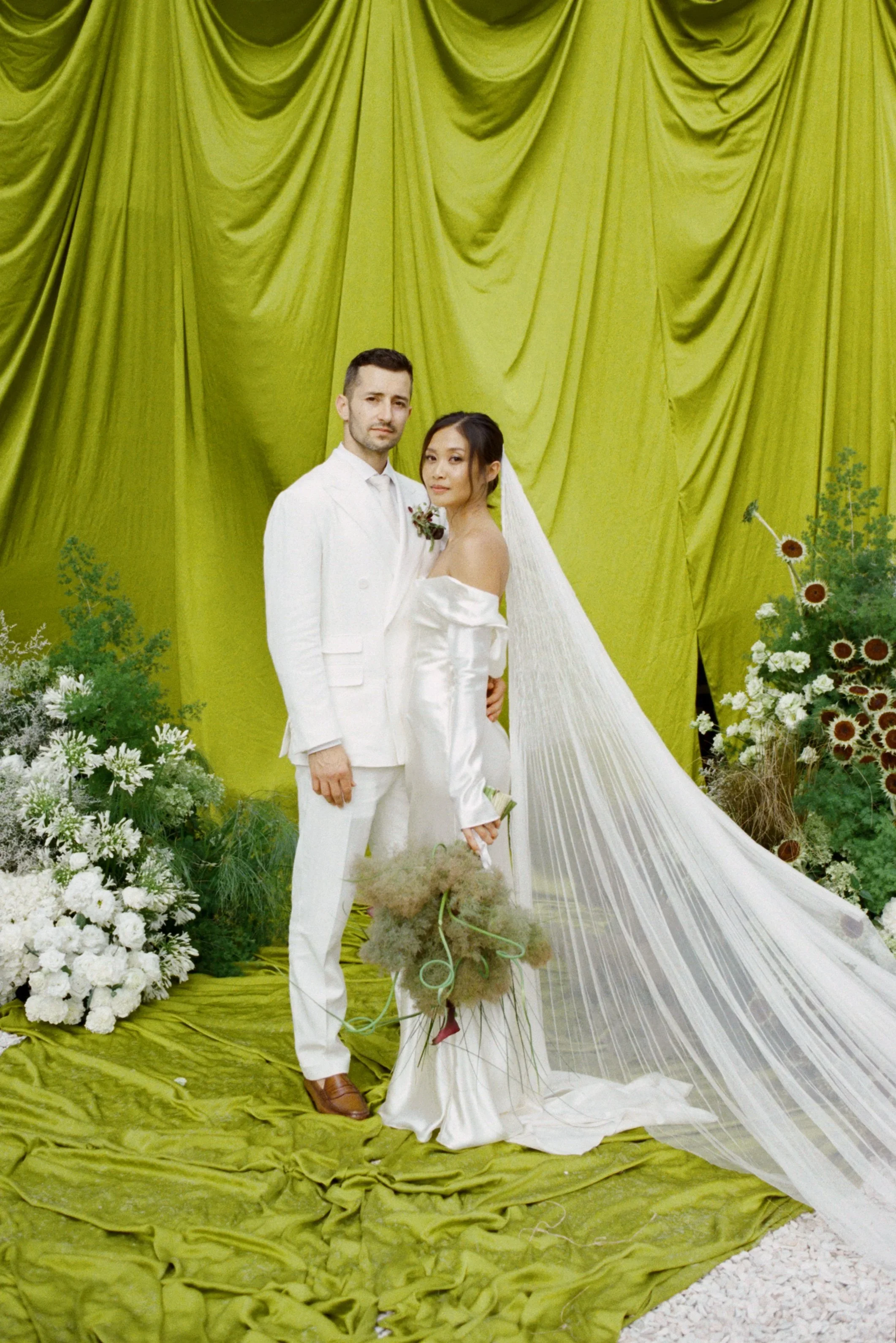

Image 1: LaLindi, Silvia Poropat | Image 2: Esme Film & Photography
More than ever, couples are planning from the inside out: asking if a moment reflects them and if the design deepens the experience instead of just decorating it. It’s a move away from aesthetics alone, towards celebrations with clear values and real authenticity at their core.
We spoke to leading planners and creatives across Italy about how they’re shaping these celebrations, and what this means for the future of Italian weddings.
Work with a Stylist for less than you’d expect.
In this 60-minute one-to-one with our LL founder Lucy White, you’ll style your wedding there and then with her unique process built over the last 10 years at Wiskow & White. Together, you’ll explore layout options for your venue, explore a design concept and palette, creating a full design deck that captures the look, feel and details of your day — from ceremony to tablescape.
You’ll also walk away with a curated list of creative vendors who fit your location, aesthetic, and budget, plus a solid wet-weather plan. Think of it as a design blueprint for your dream day.
Designing around values
In this new Italian wedding era, couples are putting heritage, sustainability, family traditions and cultural identity at the centre, and then using those values to guide design.
For some, intention means restraint. Designing around fewer guests can open up opportunities for deeper experiences and longer celebrations. For others, it means going further than before, investing in production, art direction and experiential design to create something completely personal.
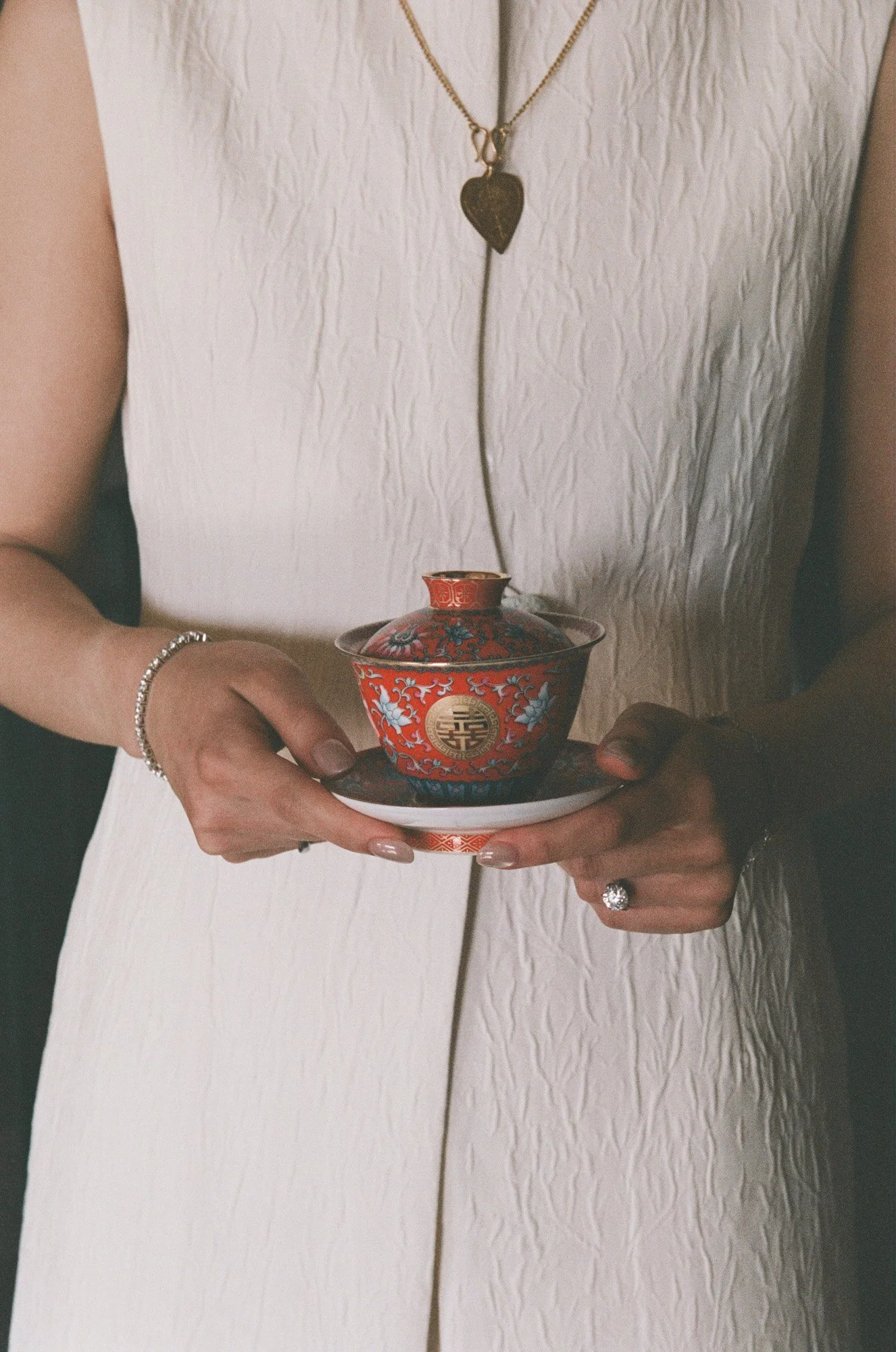
“We’re planning a Chinese tea ritual inside the ceremony. Couples want their cultures fully represented, not as a side moment but as part of the main narrative.” ~ Elisabetta White
Image credit: Love Folio
Planner Aisling recalls a wedding last summer, “Guests were invited to participate in something symbolic: the couple had the outline of the Masseria where they were married tattooed onto them. A deeply personal moment, a shared act of marking a place and a moment that would live with them forever.”
Lucy adds: “This spring we’re celebrating an Argentinian, Bengalese, Australian fusion. In the past this may have looked like a few gentle nods but this has become the centre of the design and guests experience, all whilst blending in to the cultural, contextual back drop of a 16th century Tuscan villa. It’s challenging and exciting to work with such nuance and specificity, which has to be the perfect balance, honouring everything correctly and equally.”
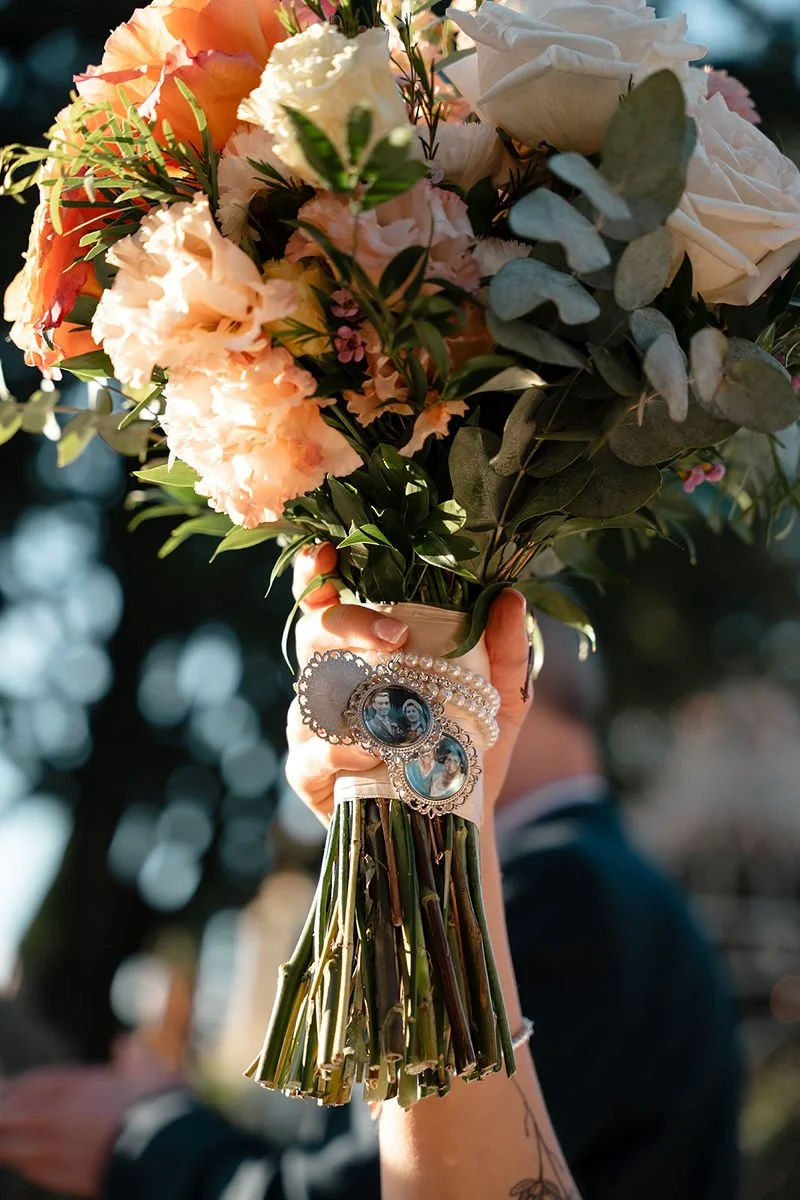
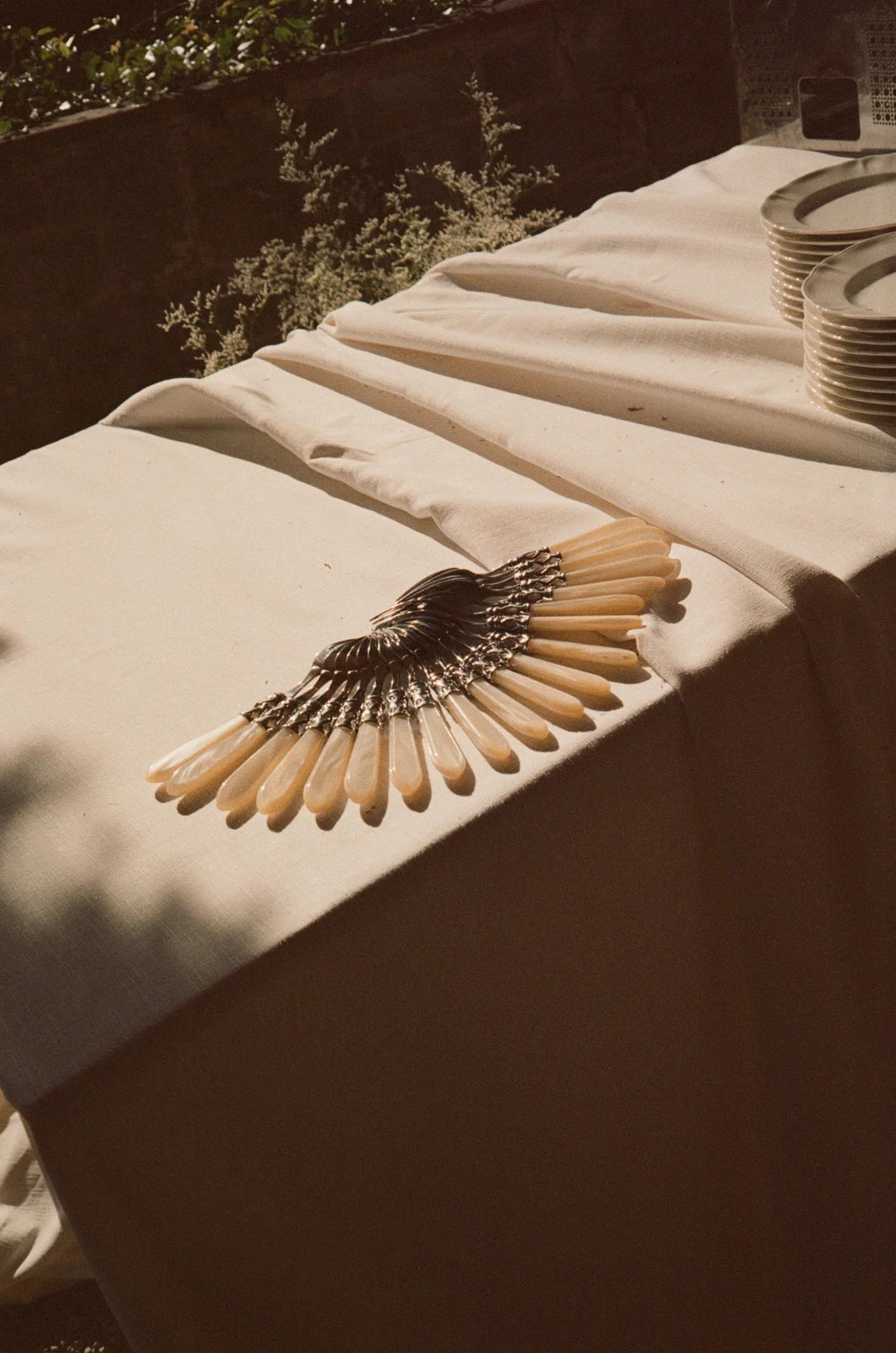
Image 1: Love Folio | Image 2: Domrose Photography
Setting the stage
If the future of Italian weddings had a design language, it would be structure.
We’re seeing:
Raised ceremony stages
Centralised dinner platforms built to feel like theatre
Seating shaped intentionally (and not always symmetrically) to command attention and frame the experience
The result feels closer to theatre or installation art than a traditional reception.
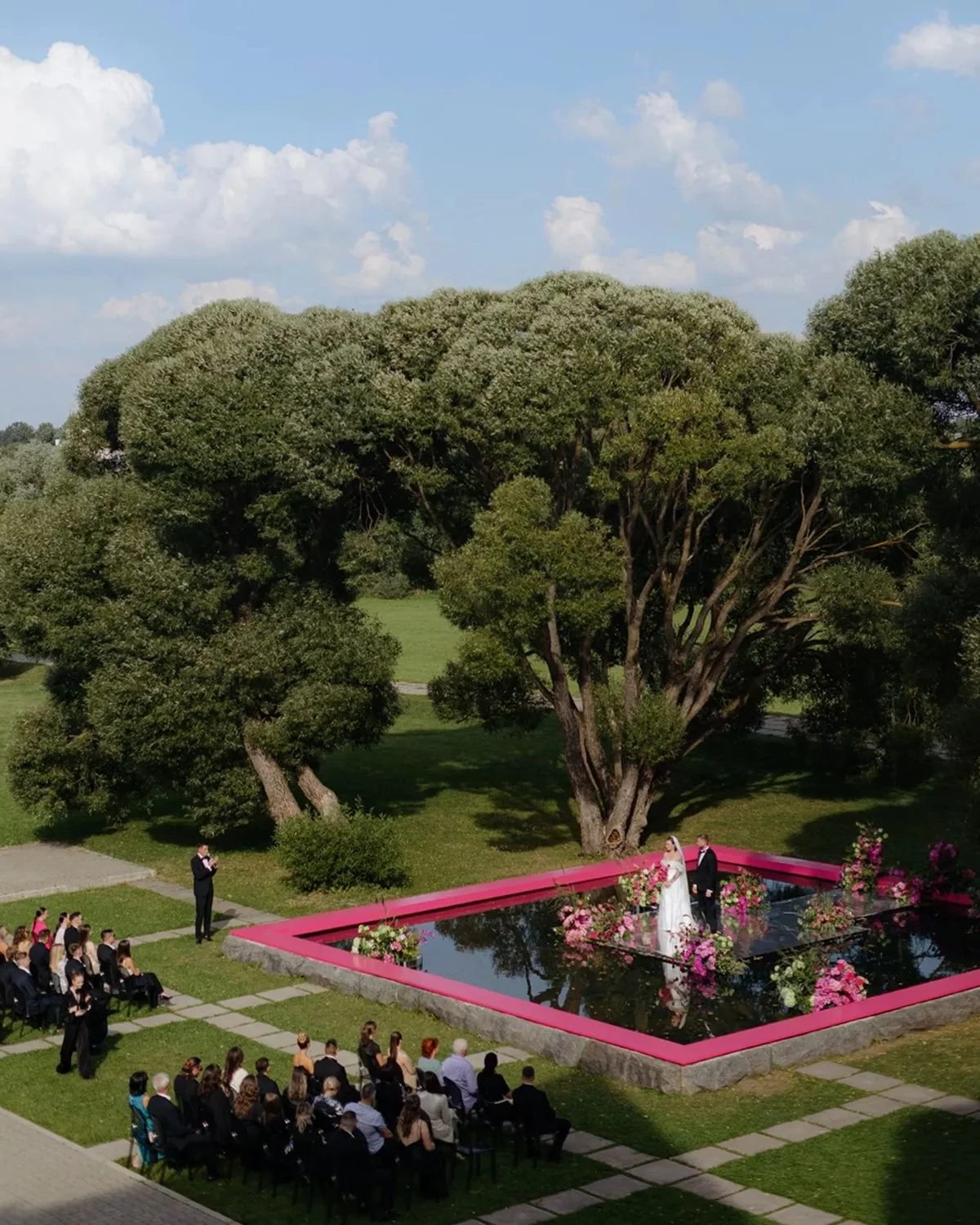
“Layout, height and shape are being used to guide focus and create a sense of occasion, especially in historic spaces where the architecture already does a lot of the visual work.” ~ Lucy White
Image sourced from Pinterest
Colour is changing too. Instead of soft blends, couples and designers are choosing block tones, strong contrast and bold monochromes – colours that stand confidently against their already striking backdrop.
It’s less about decoration, more about impact.
Storytelling with light and space
Italian weddings are increasingly full-scale productions.
Projection mapping, cinematic lighting and animated walls and ceilings are transforming the whole atmosphere using light and movement.
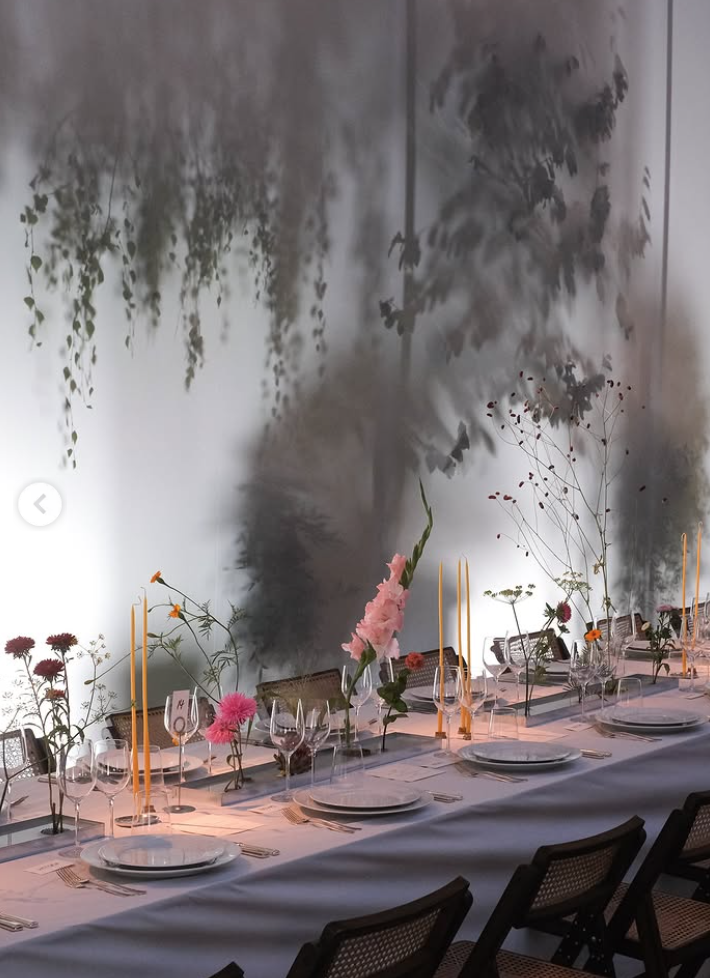
“Later this year we’ll flood a dining space quite literally with oceanic inspired lighting and cinematography in line with the wedding concept of reflection, and use colours to change the experience as guests move through the meal.” ~ Lucy White
Image credit: Elona Pinto
Production is also becoming more sophisticated at every level. Italian lighting designers, staging teams and technical crews are scaling to meet the demand for higher-end execution and precision.
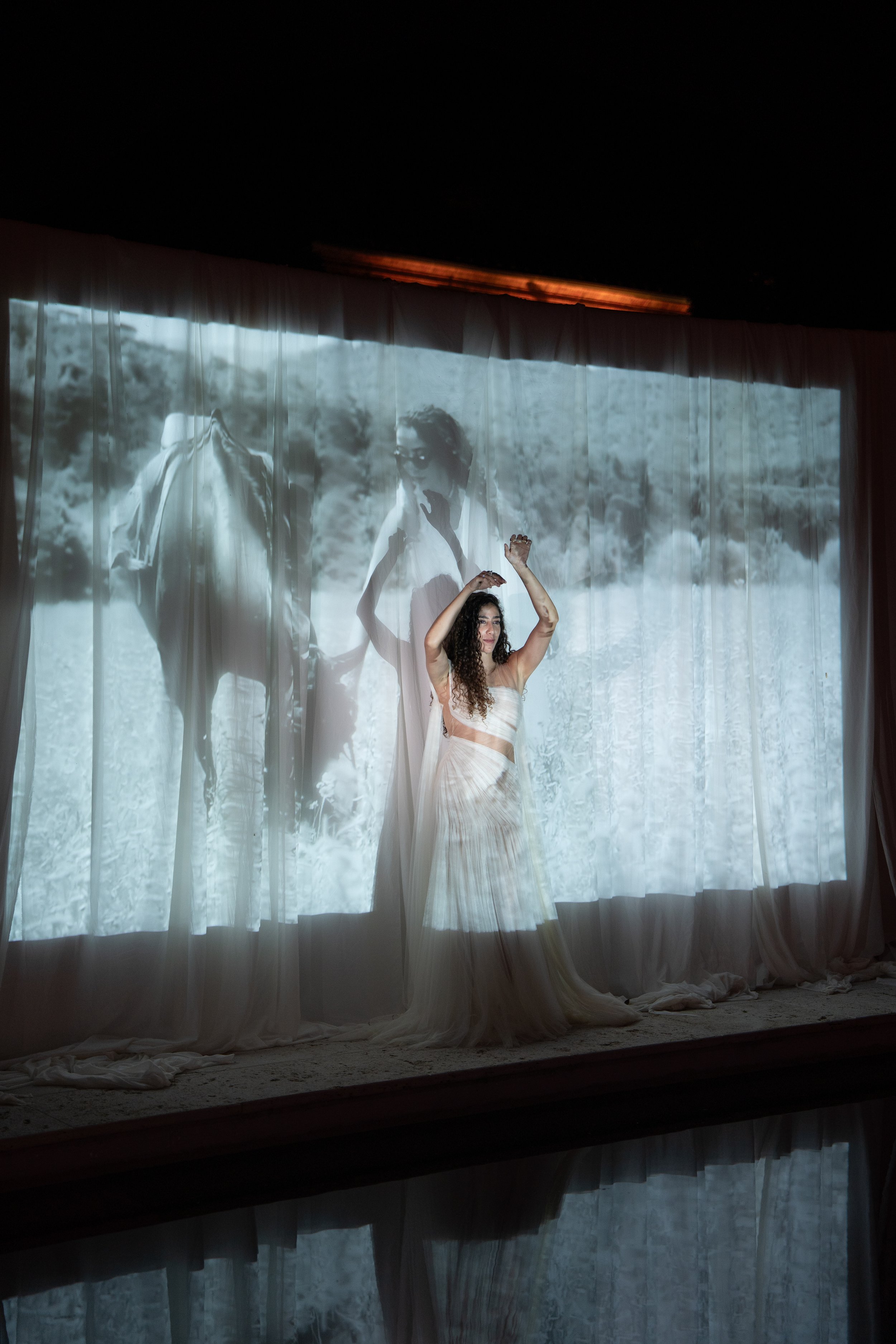
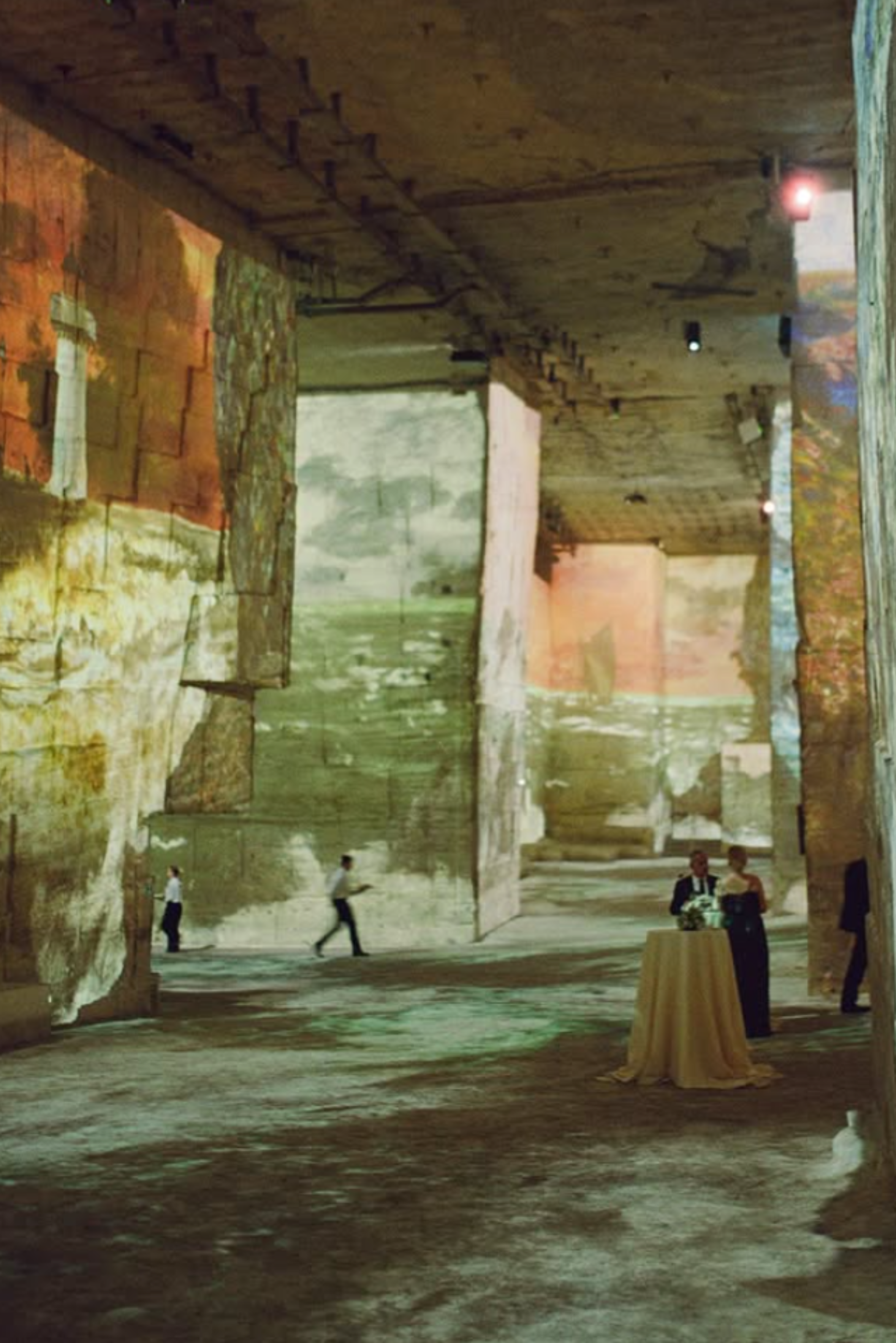
Image 1: Klassen Weddings | Image 2: Nicole Plett | Wanderlust Weddings | Tepee Sauvage | Mia Sylvia | Carrières des Lumieres | Amore Films
Creating immersive journeys
Ceremonies and dinners are no longer static. Designers are rethinking how guests physically and emotionally move through a wedding.
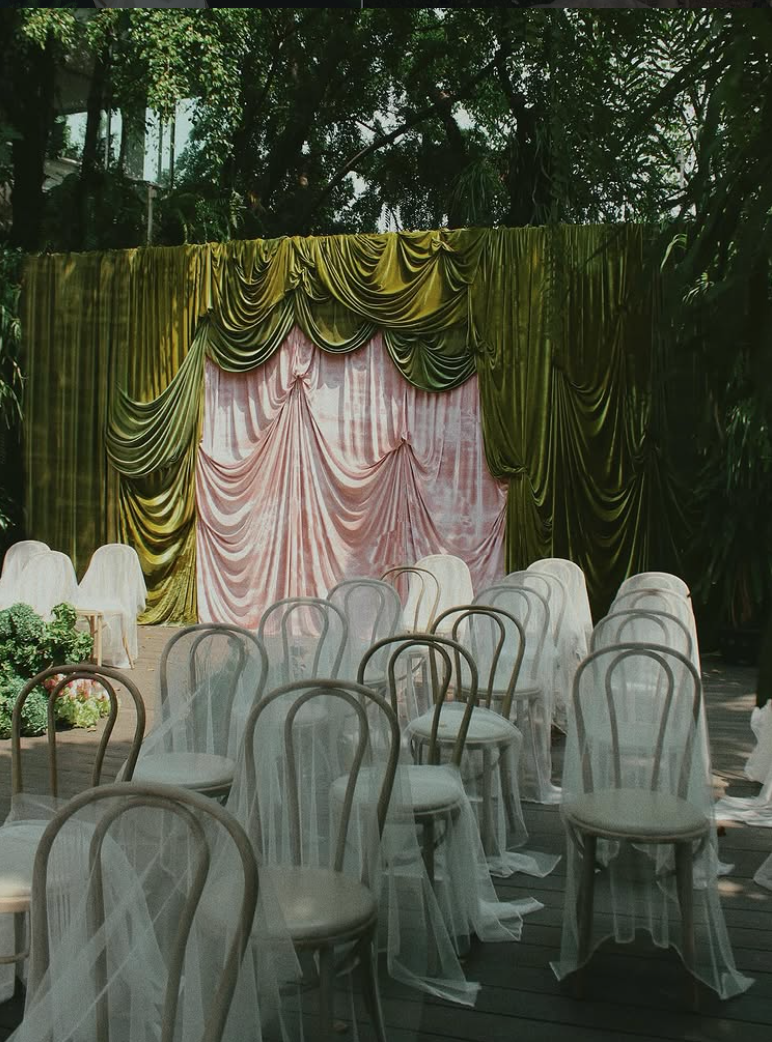
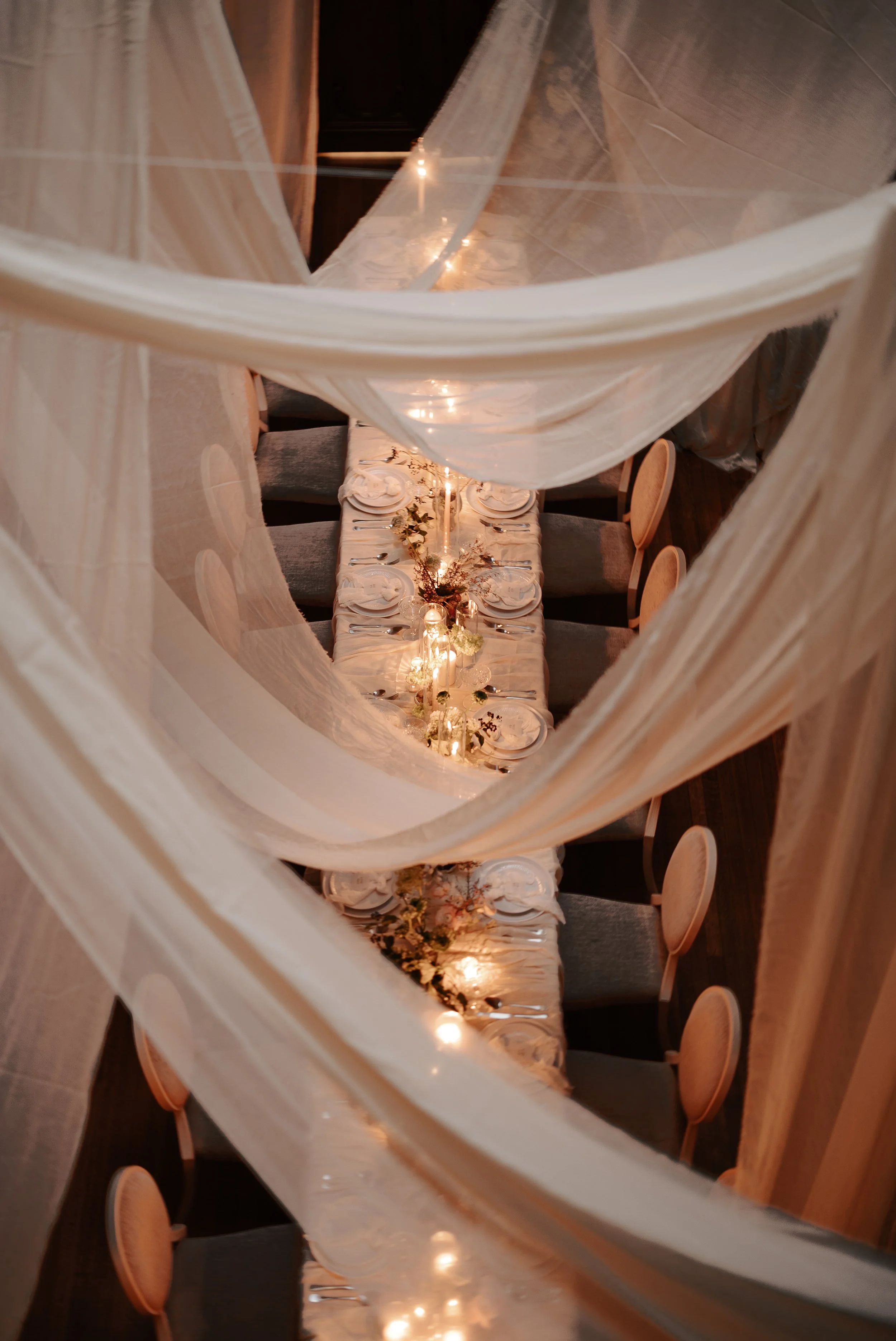
“We’re creating more in-between moments: fabric-draped walkways intended to slow people down from one moment to the next and create a sense of arrival.” ~ Rebecca Marie
Image credit: A bhistudio
These transitional spaces act as palate cleansers between chapters. The focus is on atmosphere and allowing anticipation to build.
The rise of the “house party” destination wedding
While production scales up, there’s also a strong pull towards intimacy and comfort.
Lucy continues:
“A feeling of homeliness is key to comfort at a destination wedding. Our design style is led by wanting the guests and the couple to feel at home in their wedding. This year in Puglia we’re bringing the inside, outside creating a ‘house-party’ lounge feel in a Masseria courtyard with a full listening bar.”
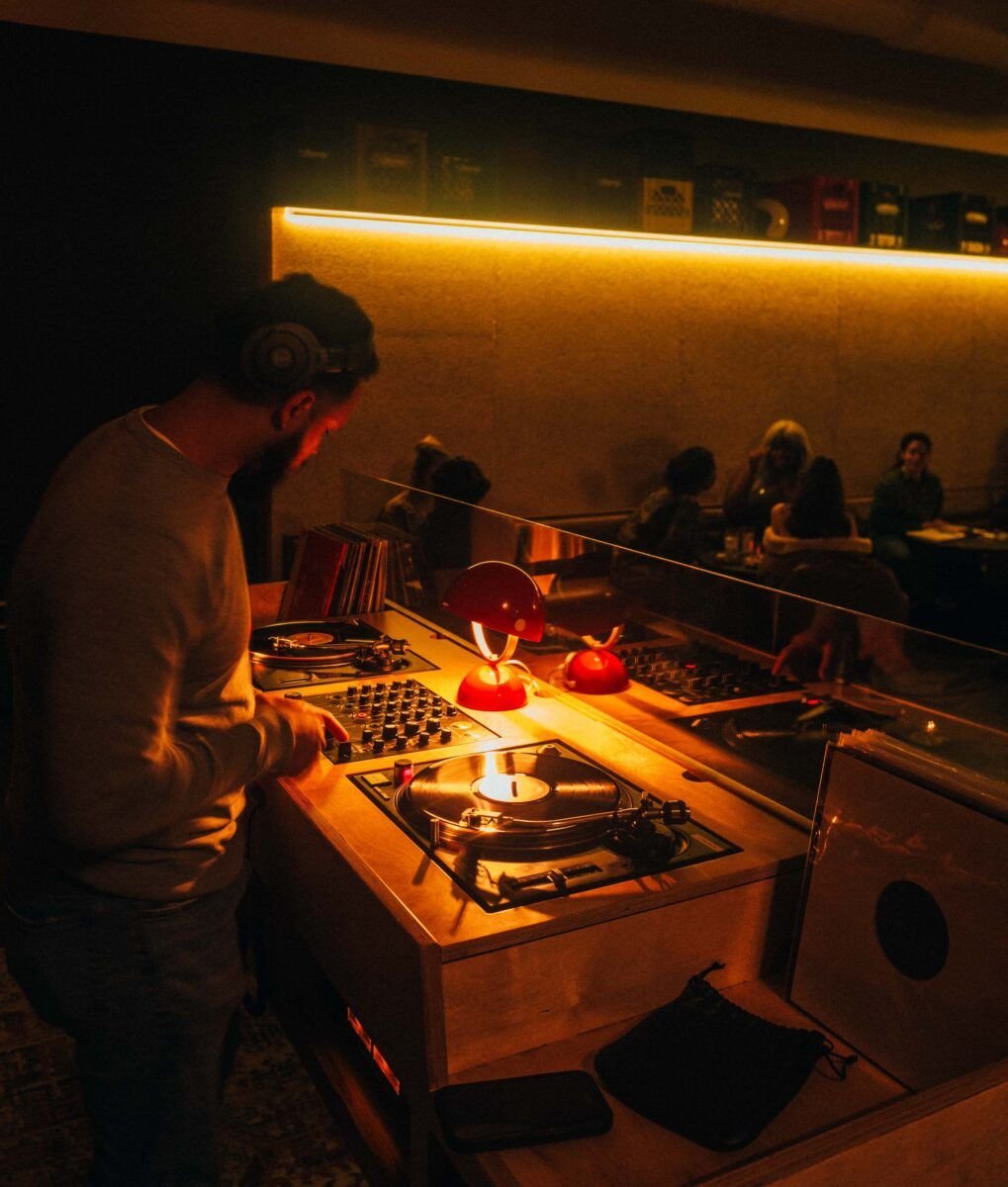
“The celebration staging will be complete with real sofas and soft lamps as well as artefacts that feel curated and collected rather than hired, including their own civil wedding photos. Guests will even get to choose from personal vinyl records for the DJ.” ~ Lucy White
Image sourced from Pinterest
It’s intentional design that still feels like home.
Floristry as Sculpture
Florals are moving away from repetition and abundance for abundance’s sake. Instead, we’re seeing sculptural compositions, architectural lines and integrated installations.
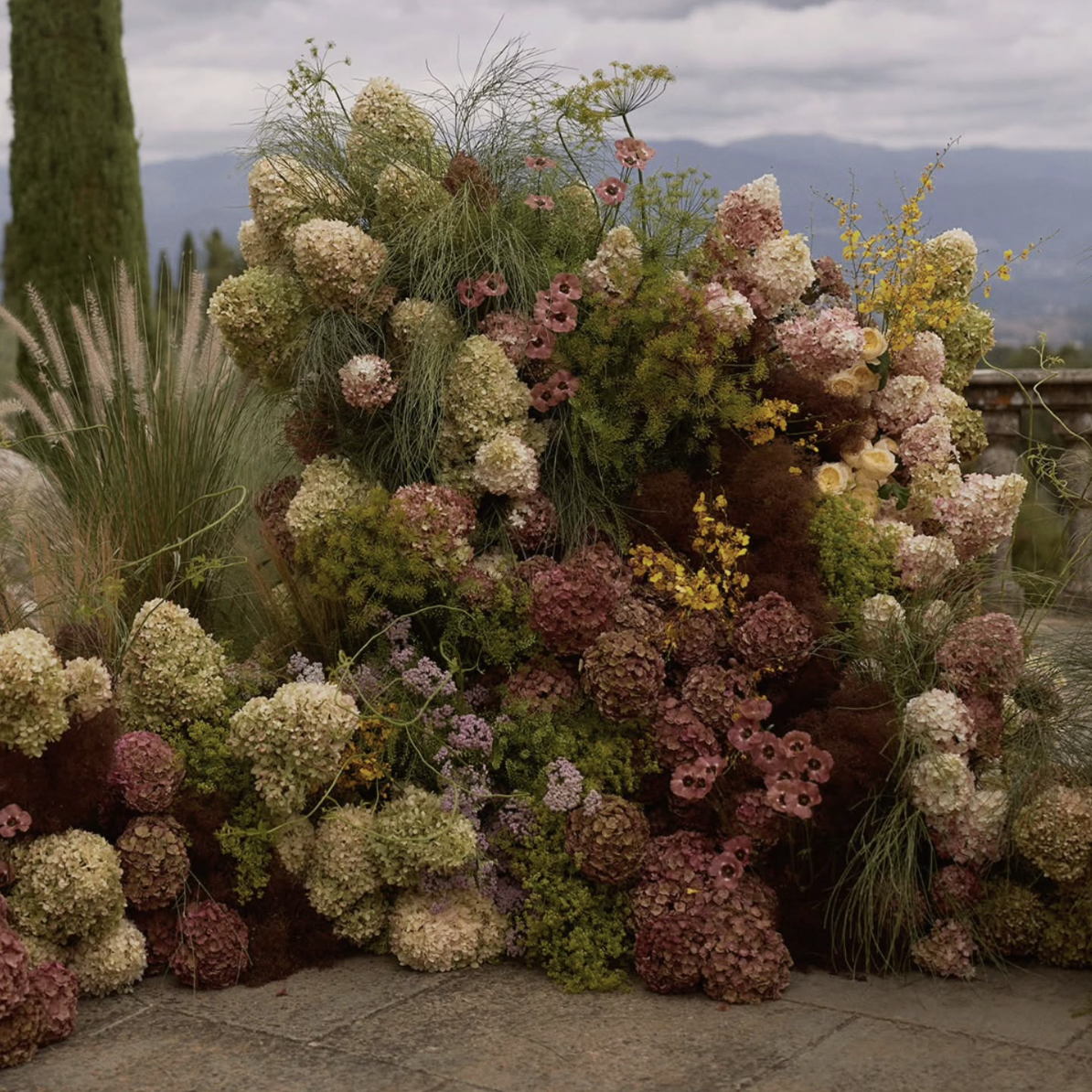
“Arrangements are full of clean shapes and modern lines, block use of florals and colours. Weddings have moved away from mixed florals and arrangements on repeat, to completely bespoke and art-like florals, often fully blended into an environment or combined with materials like stone and fabrics.” ~ Nunzia Guerino
Image credits: Nunzia Guerino | Whiskow & White | Benjamin Wheeler
Floristry is becoming interdisciplinary; part installation, part set design.
The skillset required is evolving, too, towards precision mechanics, structural engineering, and a deeper understanding of materials.
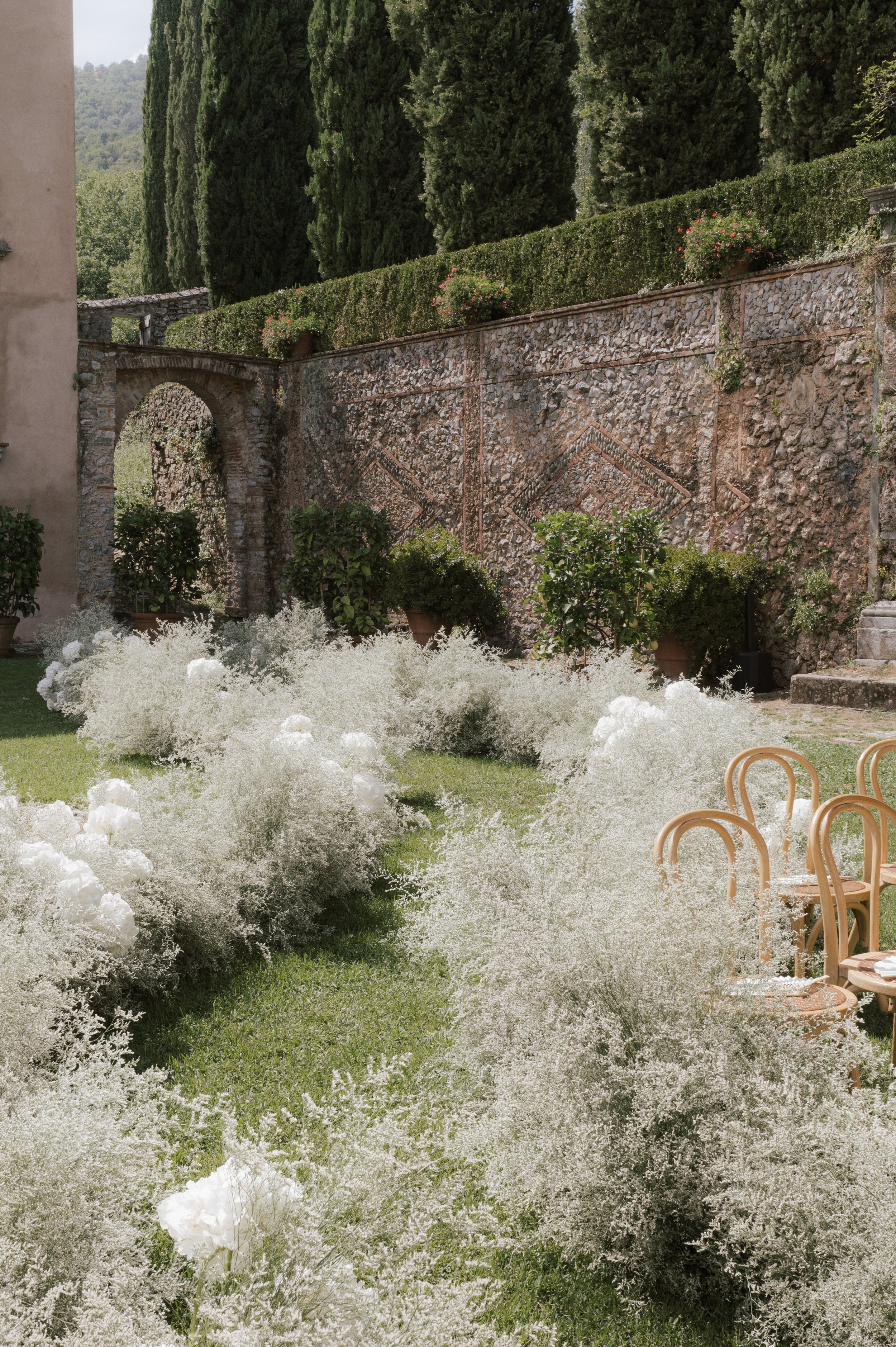
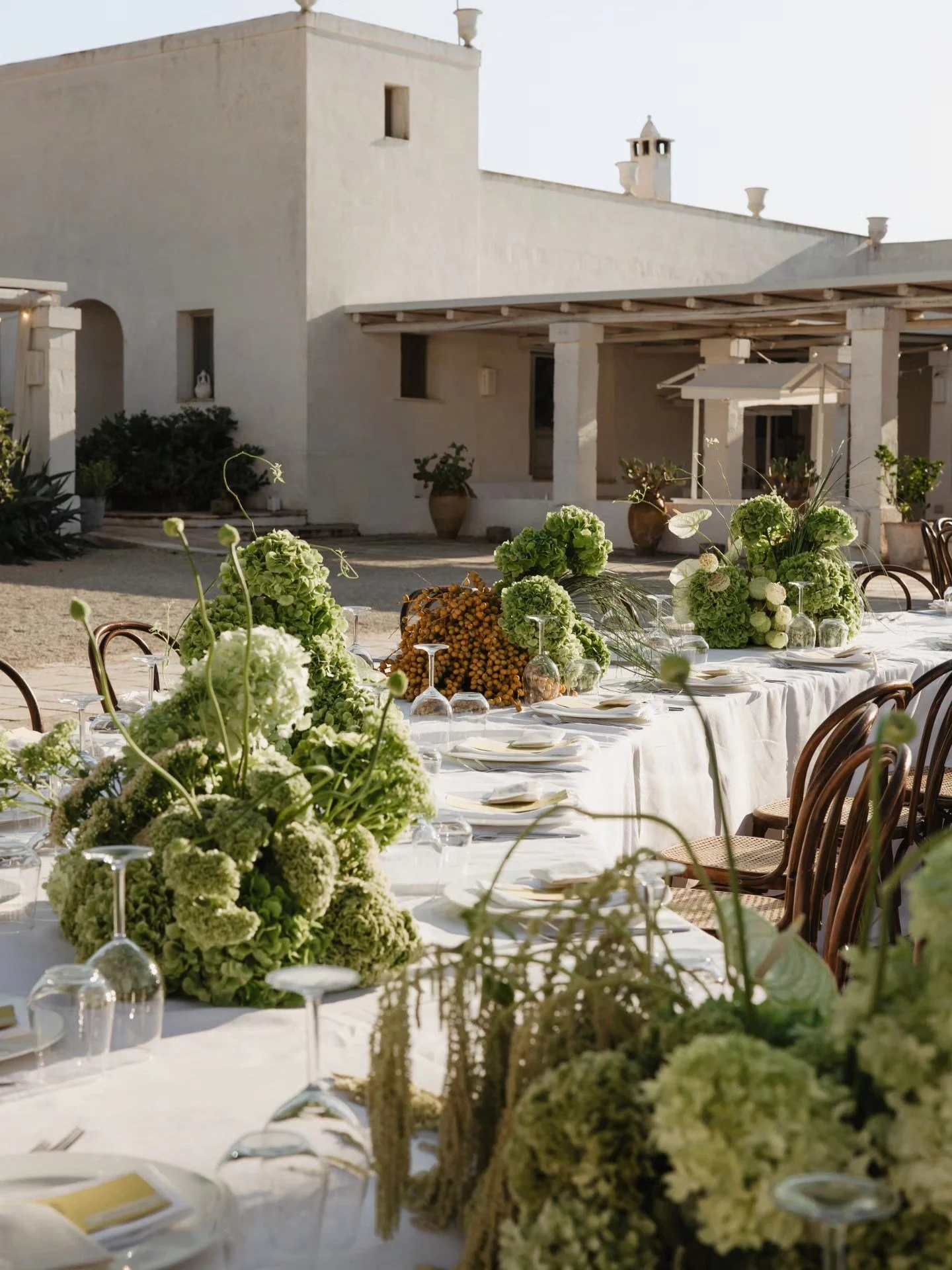
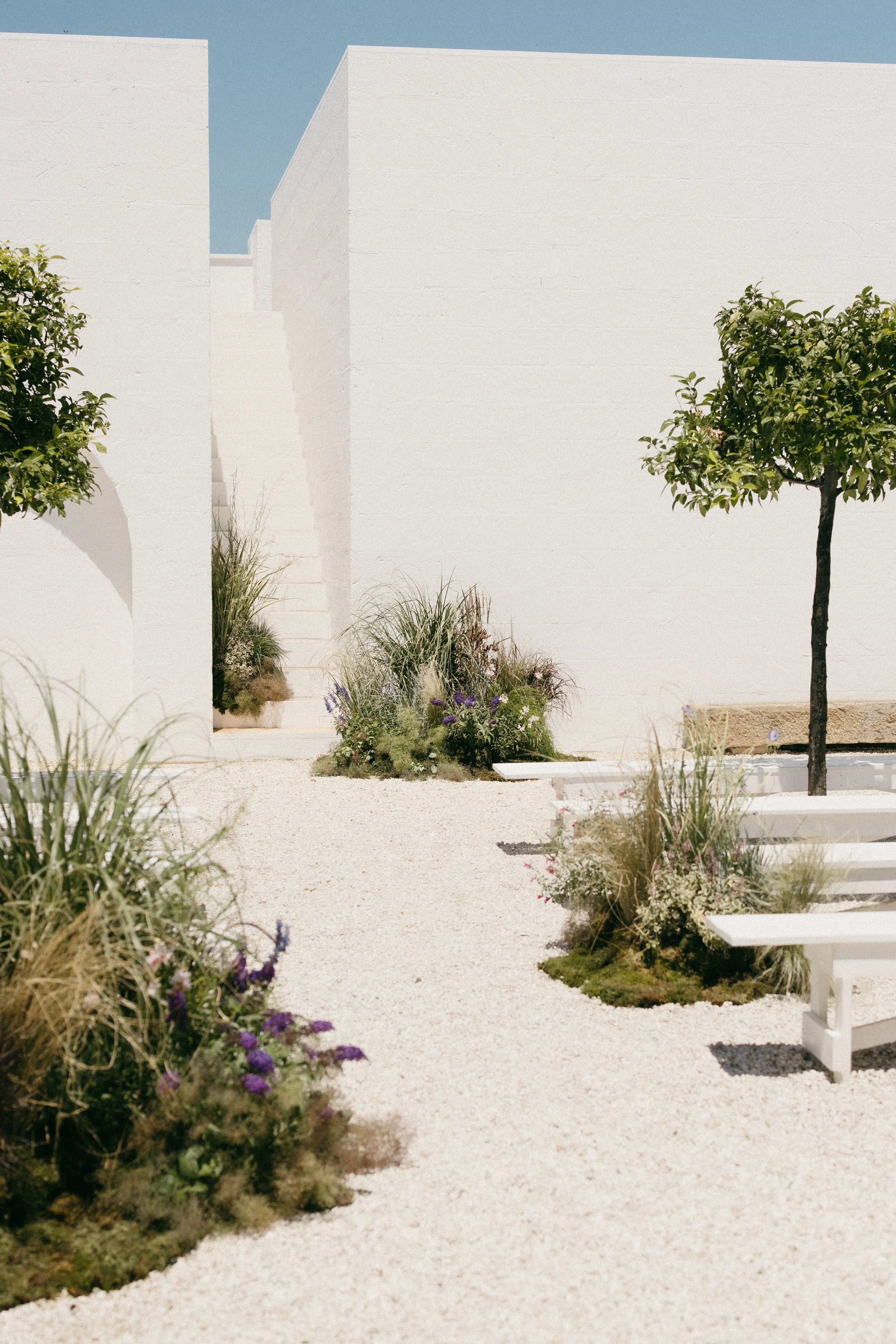
Image credits: Nunzia Guerino | Katerina Fedora | Erik Winter | Monika Frias
What this means: for Italian weddings
As Aisling says, “wedding design is no longer colour palettes, table layouts, styling moments designed to photograph well and circulate widely. It’s fully immersive and conceptual.”
Italian weddings in 2026/27 therefore won’t be defined by a singular aesthetic trend. They will be defined by intention.
For some, that means scaling back to a candlelit courtyard with 40 guests. For others, it means immersive lighting, architectural staging and theatrical dining experiences.
Italy stays as the backdrop but the story is becoming unmistakably personal.
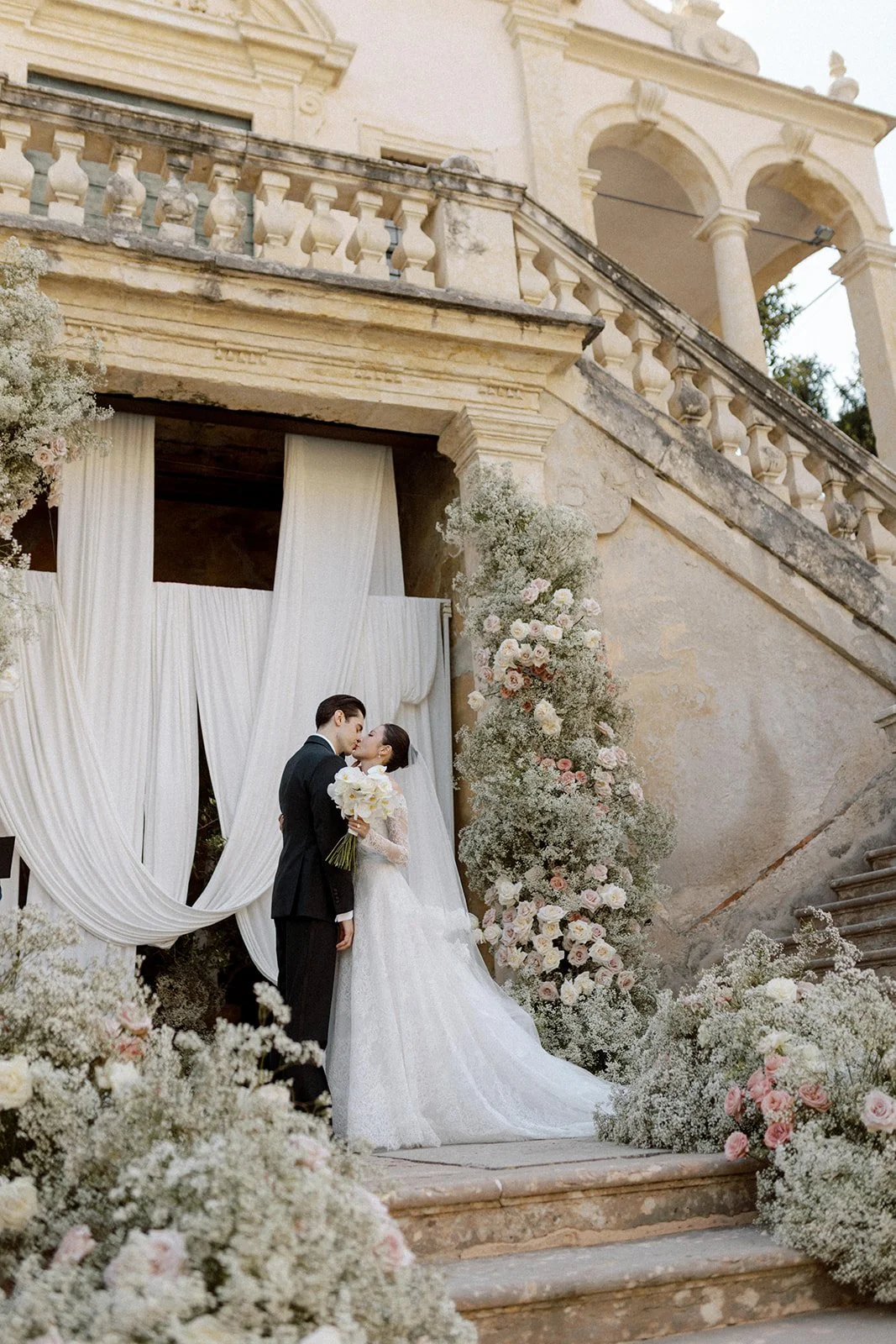
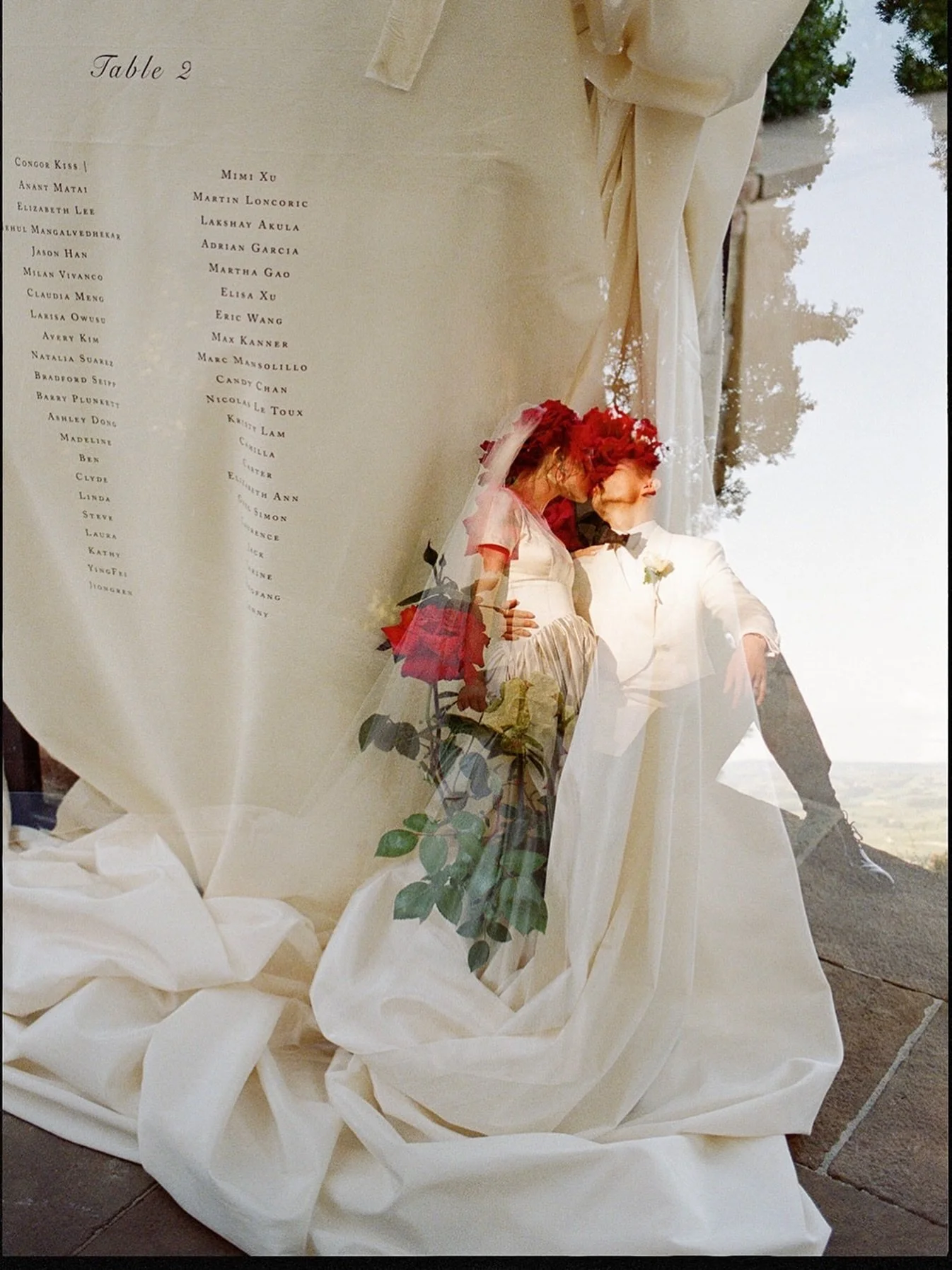
Images 1 & 2: Studio Chloe David | Image 3: Rebecca Marie Weddings
What this means: for couples and creatives
For couples, this evolution demands more than taste or aesthetic preference. It asks for clarity, time and, honestly (but not always), a bit more budget. Whether it's elevated production, bespoke installations, immersive lighting or sculptural florals, none of it exists without skilled teams, technical infrastructure and meticulous planning.
For creatives, this means the bar is rising. Technical skill, communication, client guidance, styling, production literacy — all of it matters. Couples want depth. They want original thinking. They want leadership.
The future of Italian weddings will belong to professionals who refine their craft, strengthen their operational excellence and think beyond trend cycles.
What next?
If you’re planning your wedding in Italy and want this level of considered, value-led design, explore our vetted and recommended planners on The Directory or book a Styling Consultation with Lucy.
If you’re a planner, designer or creative working in Italy and want to stay ahead of this shift, join The Collective for industry intelligence and honest conversation about the future of Italian weddings.

Categories
PLANNING | REAL WEDDING | BUSINESS | SUPPLIER SPOTLIGHT | INSPIRATION | WANDERLUST
